6/22/13

Social deprivation


Social deprivation has a measurable effect on brain growth http://goo.gl/eGQGQ


6/21/13

HOMELESSNESS, MENTAL HEALTH
& SUBSTANCE USE
Research Bulletin #4

HOMELESS PEOPLE WITH ‘CONCURRENT DISORDERS’
ARE MORE VULNERABLE THAN OTHER HOMELESS
PEOPLE AND FACE EVEN GREATER BARRIERS TO
HEALTH CARE & COMMUNITY SERVICES
 
In a survey by Street Health of 368 homeless adults in Toronto, one quarter (26%) reported both mental
health issues and regular drug or alcohol use, a condition often referred to as a ‘concurrent disorder’. Our
study compared this group with other homeless people and found that homeless people with concurrent
disorders were more socially isolated and more likely to be physically assaulted. Homeless people with
concurrent disorders also had worse health status, as well as worse shelter and health care access, than
other homeless people.

Kevin’s Story
Kevin has struggled with mental health and substance use issues for most of his life.
Diagnosed with schizophrenia in his twenties, the medication he was prescribed
didn’t work for him and eventually he began to use street drugs. For over twenty
years, he lived on the streets, in shelters, and in prison. Kevin’s life finally
began to turn around when, almost by accident, he was referred through the justice system to a residential treatment centre designed to address all of his needs in an integrated and holistic way. His discharge plan included finding him his own
apartment with supports attached. Throughout all these transitions, Kevin received ongoing support and encouragement from a community worker who has worked with him for over 18 years. All of these supports helped Kevin to improve his mental health and stabilize his substance use, and have helped him continue to stay housed. Today, Kevin’s involvement in various community-based activities and groups is vital to his current state of well-being and his motivation to keep doing well.
 
“Without counselling, how do you
know what’s out there? What helps
is having a partnership with your
worker ... and support. Giving
me encouragement ... it makes it
easier to endure it out there.
[My worker] helps me to figure out
the system, she opens doors.”
– Kevin, Street Health Survey
Peer Researcher with lived
experience of a concurrent
disorder

Insanity Explained


Insanity: doing the same thing over and over again and expecting different results.
Albert Einstein


Insanity is relative. It depends on who has who locked in what cage. 
 Ray Bradbury


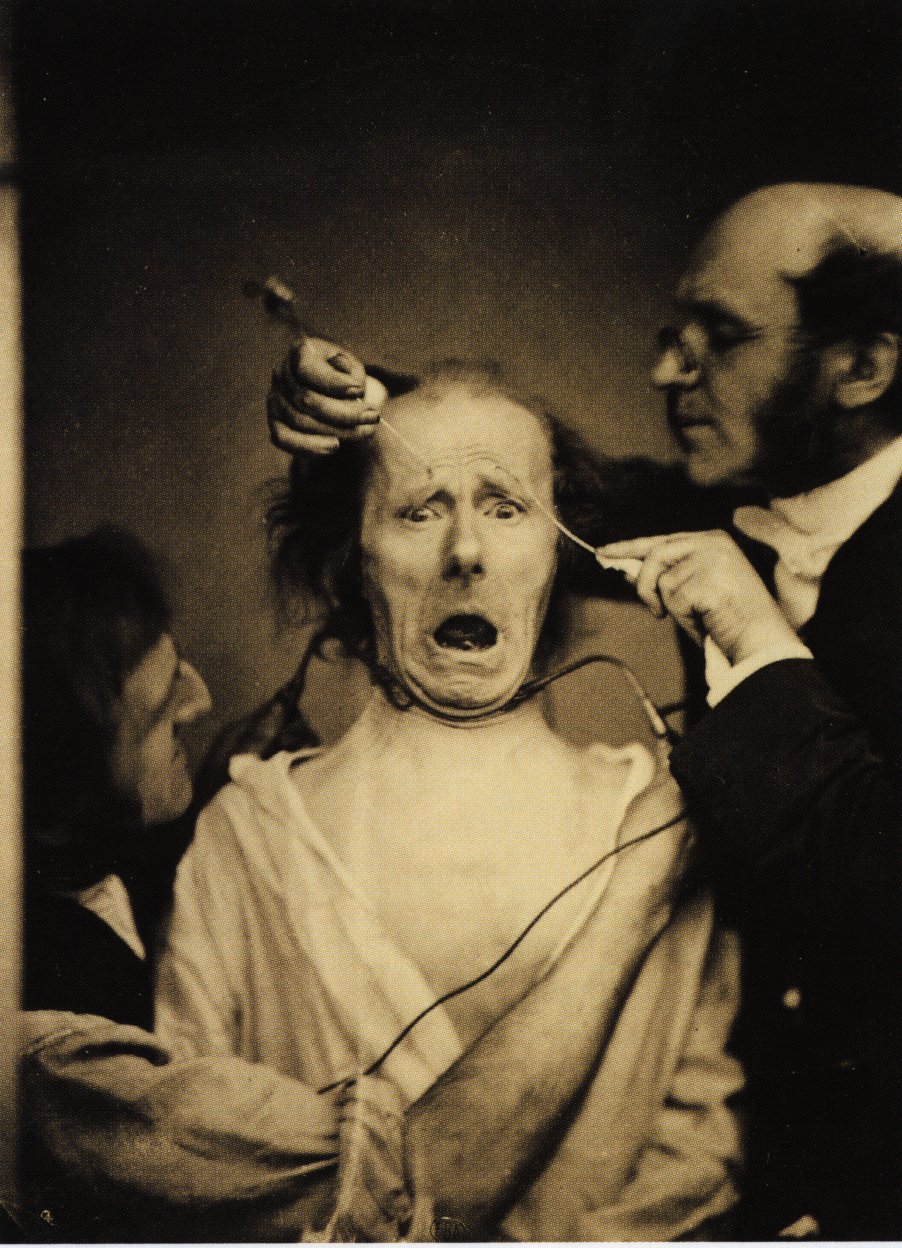
Guillaume Duchenne de Boulogne performing facial electrostimulus experiments.jpg

Duchenne de Boulogne (1801 - 1875)  
category:medecine

http://en.wikiquote.org/wiki/File:Guillaume_Duchenne_de_Boulogne_performing_facial_electrostimulus_experiments.jpg


3/2/13

Victoria homeless deaths triple


An anti-poverty group in Victoria wants the regional coroner to hold an inquest into 30 deaths among the city's street population over the past four months.

While the causes of death range from pneumonia to overdose to suicide, the Poverty Law Club at the University of Victoria says the number of deaths has tripled since the same time last year.

Yianni Pappas-Acreman says an inquest could help find ways to prevent poverty-related deaths in the future.

"It is within their power to conduct any inquest that's been reported to them on a class of deaths such as this that are related if it is in the public interest, and we think it is in the public interest,” he said.

"What we would hope to get out of it would be more information about the causes of death, but more importantly, recommendations leading from those facts."

Death Review Panel

Spokeswoman Barb McLintock says the B.C. Coroners Service is considering whether to convene a Death Review Panel instead of an inquest.

She says it would bring together a group of experts to examine a range of deaths among one group.

"The experts sit down for a few days and look at the issues surrounding this and then see if they can come up with some recommendations, which are like inquest recommendations,” she said.

“They're passed on to the chief coroner and then the agencies involved.”

 McLintock says it will likely take another month to make a decision about the review.


Source:
30 Victoria homeless deaths in 4 months draw inquest calls - British Columbia - CBC News


 http://www.cbc.ca/news/canada/british-columbia/story/2013/02/27/bc-victoria-homeless-deaths-inquest.html#.UTK-9ttsbdM.blogger


2/26/13

Bully get the message: To This Day Project - Be mindful that actions have consequences


Published on Feb 19, 2013


Shane Koyczan "To This Day" http://www.tothisdayproject.com Help this message have a far reaching and long lasting effect in confronting bullying. Please share generously.

Find Shane on Facebook - http://on.fb.me/Vwdi65
or on Twitter - http://www.twitter.com/koyczan

I send out one new poem each month via email. You might like to join us. http://www.shanekoyczan.com

"My experiences with violence in schools still echo throughout my life but standing to face the problem has helped me in immeasurable ways.

Schools and families are in desperate need of proper tools to confront this problem. This piece is a starting point." - Shane

Find anti-bullying resources at http://www.bullying.org

Dozens of collaborators from around the world helped to bring this piece to life. Learn more about them and the project at http://www.tothisdayproject.com

Buy "To This Day" on BandCamp http://bit.ly/VKGjgU

or iTunes http://bit.ly/W47QK2


Source:
To This Day Project - Shane Koyczan - YouTube

 https://www.youtube.com/watch?feature=player_embedded&v=ltun92DfnPY#!


2/14/13

Obama: ... no one who works full time should have to live in poverty." :


GET A LIFE NOW

Obama: "Let’s declare that in the wealthiest nation on Earth, no one who works full-time should have to live in poverty."


http://t.co/M4U5r2M6


The Best from Twitter


In-A-Gist algorithmically curates tweets based on popularity in real-time. We collate tweets on the same topic and this page is built from such curated tweets. We keep refreshing this page as and when we find popular tweets on topics mentioned in the tweet. They are presented in the "Related Tweets" section.


Source:

"Let's declare that in the wealthiest nation on Earth, no one who works full time should have to live in poverty." : MotherJones

http://inagist.com/all/302164220349382657/


1/9/13

Sexual slavery: average lifespan is 7 years… - Joy In These Days - timesunion.com - Albany NY


Joy In These Days

By Liz Lemery Joy, ordained Christian minister and Bible teacher


Sexual slavery: average lifespan is 7 years…

Dear Readers,

As you know, I have been highlighting the sex trafficking industry in the United States. We have gotten a lot of feedback in comments and other conversations regarding this issue. I am the first one to admit, that I truly didn’t realize, or have an awareness about the magnitude of trafficking young girls and boys on American soil. As a mother of four, two girls and two boys,….I was heart broken. I couldn’t wrap my head around the horrific abuse these young precious ones must endure…it gripped my soul.

Then, I became friends with Melissa Woodward, founder of For the Sake of One. This is one ministry, among many ministries and organizations that are trying to stop sex trafficking. She is also a survivor, which is very rare. She barely made it out alive. You can read her story in the previous posts.


I was on the phone with her the other day, and one of the statistics she cited shook me to the core. She said the average expected lifespan of a young trafficked child is 7 years. Meaning, once they are put into the industry, within 7 years they will be dead. Many are beaten to death, shot, get sick and receive no treatment, or like Melissa, might be thrown into a trash can after a ‘buyer’ wants to act out a deadly fantasy…they simply die, or are left to die…

Sex trafficking is an issue everyone in America can come together on. There is no politics, economic background, tax bracket, or religion, that can divide the hearts of Americans coming together to put a stop to this industry. It’s purely evil and deadly. It is affecting our youth and generating billions of dollars in the United States. It is an industry that is fueled by pornography. The pornography industry is one of the biggest revenue generators in the entire world.


There is so much we can do! We can give our time, or financial resources. We can put pressure on retailers, and television networks to stop allowing porn related materials in their stores and networks.


If you can’t give resources, at least be aware and teach your children and teens what to watch out for. I would also ask you to post this video to your Facebook pages. Help others be aware too. Perhaps, they were like me, and didn’t really realize the scope of the problem in the United States- And by the way, statistically, New York state is one of the top states for sex trafficking…


Sincerely,
Liz


Jun 8, 2012 by

In Los Angeles County, girls, as young as 11 or 12, are being bought and sold on the streets as prostitutes. These young girls are being manipulated by pimps and put on the streets to make money. A trafficker can make over $140,000 annually off of one girl and most have more than one girl in their stable. MANIPULATED is a gritty and real look at this issue that is not just happening "over there."

Music Credit: Chromatics, Cliff Martinez

Source: 

http://www.youtube.com/watch?feature=player_embedded&v=tJlkLFSmbb4

Many other videos here.


Source:
Sexual slavery: average lifespan is 7 years… - Joy In These Days - timesunion.com - Albany NY


Sailing

Park Bridge

Statue of man with open book


photo 

Untitled

Invisible Indian: Federal Court grants rights to Métis, non-status Indians


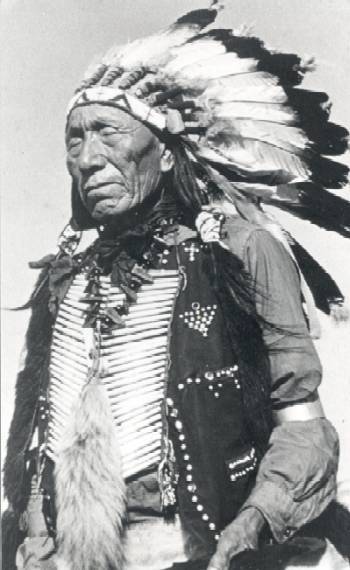
“ The growing and dying of the moon reminds us of our ignorance which comes and goes—but when the moon is full it is as if the Great Spirit were upon the whole world. ” 

—Black Elk, Oglala Sioux


Federal Court grants rights to Métis, non-status Indians

Off-reserve aboriginal people are 'Indians' and entitled to same constitutional rights

The federal government has lost the latest battle in a 13-year legal fight over its responsibilities to Métis and non-status Indians.

On Tuesday, the Federal Court ruled that 200,000 Métis and 400,000 non-status Indians in Canada are indeed "Indians" under the Constitution Act, and fall under federal jurisdiction.
The decision helps to more clearly outline Ottawa's responsibilities toward the two aboriginal groups.

"The recognition of Métis and non-status Indian as Indians under section 91(24) should accord a further level of respect and reconciliation by removing the constitutional uncertainty surrounding these groups," Federal Court Judge Michael Phelan writes.


Invisible Indian


source:
Federal Court grants rights to Métis, non-status Indians - Politics - CBC News

 http://www.cbc.ca/news/politics/story/2013/01/08/pol-cp-metis-indians-federal-court-challenge.html


1/8/13

Legal Pot Draws Lawyers, Wall Street to Washington


Legal Pot Draws Lawyers, Wall Street to Washington


Customers have been drifting into Jay Fratt’s alternative pipe and tobacco shop, Smokin J’s, in the days since Washington state’s marijuana law took effect, wondering when cannabis would take its place on the shelves next to the handblown glass pipes.

Hold on, he told them. Fratt is, before anything else, a businessman, and he quickly realized there was a lot of smoke in the details.

First of all, the law setting up the nation’s first legal regulatory system for retail pot won’t allow sales until next year. And the federal government still considers marijuana illegal.

Then there are the taxation provisions: Can legal retailers compete with the black market when they have to pay over 25% in taxes? What about the provision that says marijuana shops can’t stock anything but pot and pot supplies? What would happen to the Vancouver, Wash., shopkeeper’s tie-dye baby jumpsuits, his “Stoner” trivia games, his meditating Buddha tapestries?

The euphoria that accompanied the debut of the initiative making it legal inWashington for adults to possess an ounce or less of marijuana faded shortly after midnight Thursday, when about 150 people gathered at the base of the Space Needle in Seattle to toke up in celebration.

By Friday morning, the bureaucrats, the lawyers and the suits from Wall Street were pulling into town as state regulators began setting up what could become a $1-billion industry, built precariously on a product whose possession the federal government considers a felony.

State officials estimate that pot will soon be selling legally for about $12 a gram, with annual consumption of 85 million grams — a potential bonanza in state tax revenue of nearly $2 billion over the first five years.

“I’m telling my clients, if I had a collective and I knew that legalization was coming and I knew they were going to be licensing people and I was already in the business, I’d be one of the first people going to apply for a license,” said Jay Berneburg, a Tacoma, Wash., lawyer who held a seminar recently about getting into the retail trade.

“You could make a million dollars in five days. There’s going to be people lined up to buy marijuana, just because they can,” he said.

Venture capitalists are moving in. Brendan Kennedy and Michael Blue, two Yale University MBA graduates with backgrounds in Silicon Valley, have raised $5 million through their private equity firm, Privateer Holdings, believed to be the first in the nation to focus strictly on marijuana-related companies.

“We realized this was and is the biggest opportunity we think we’ll probably see in our lifetimes,” Blue said.

Their first acquisition was Leafly.com, a website that rates strains of marijuana for their medicinal properties. Users can plug in their ZIP codes and find out which products available in their areas produce the effects they’re looking for, from “giggly” to the ability to treat migraines.

Vaporizers are another product they’re looking at — anything that doesn’t directly involve buying or selling marijuana. Privateer is offering investors the chance to make money in an arena most venture capitalists can’t touch under standard partnership agreements, which normally spell out that investments not in compliance with federal law are prohibited. That means, they figure, an opportunity for stunning profits with little competition from other investment firms — though one has to listen to a lot of Bob Marley at trade shows.

“I’ve studied a lot of industries. I’ve never seen one that had this unique set of circumstances,” Kennedy said. “It’s highly fragmented, it’s very unstructured, there’s no leaders, there’s no standards. The entire topic is taboo, and there’s no involvement by Wall Street … which is a unique opportunity, right?”

The state Liquor Control Board is asking for a staff of 40 to help set up a network of possibly 300 or more state-licensed retail stores. The board must also figure out how to regulate growers and packagers.

That process will take much of the next year. Though it has been legal since Thursday for adults to use small amounts of marijuana away from public view, they can’t buy it, sell it or grow it until regulations are in place. Exemptions remain for medical users under existing law.


Read More: Here


Source:
Legal Pot Draws Lawyers, Wall Street to Washington



Winter plum


Winter plum


 Source:
Winter plum | Flickr - Photo Sharing!

http://www.flickr.com/photos/53797522@N05/6847769714/

http://www.flickr.com/photos/53797522@N05/with/6993903785/


Michał Mirski-Kowalski's photostream


12/24/12

Landfill Harmonic - Children creating music


 Humans adapt in some highly creative ways....


The Recycled Orchestra: Slum Children Create Music out of Garbage


A video of slum children creating music with instruments made of trash has been reposted
 nearly 345,000 times on Facebook in the past week. Some viewers said
they wept when they heard the rich, deep notes from a cello made of
rusty oil can.


These young musicians hail from a village in Paraguay called Cateura,
 a town perched on top of a mountain of garbage. Every day 1,500 tons of
 solid waste is dumped in a landfill in Cateura, where 2,500 families
live. These families, with the help of their children, survive by
recycling whatever they can find in the landfill, according to UNICEF.


One day Favio Chávez, an ecological technician, had a wild idea of
giving these children something that would have been beyond their reach:
 playing music in an orchestra. Although he was trained as a musician
and had experience in forming ensembles, he knew few if any families
could afford musical instruments in Cateura, where a violin, Chávez says
 in the video, is worth more than a house.


To his delight he discovered
the solution was literally within his grasp: The dump site was
overflowed with material capable of making music.


“One day it occurred to me to teach music to the children of the recyclers and use my personal instruments,” Chávez, 36, told
 Fox News Latino.


“But it got to the point that there were too many
students and not enough supply. So that’s when I decided to experiment
and try to actually create a few.”


(MORE: OK Go to Release Music Video Featuring 1,000 Handmade Instruments)


That was when Chávez had an epiphany:  “The world sends us garbage,
we send back music,” as a quote from Chávez reads in the video’s
introduction.

Thus The Recycled Orchestra was formed. Its fame has taken the
30-member ensemble traveling around the world, performing in Argentina,
Brazil and Germany.

Being able to play an instrument has profoundly changed some members’
 lives. “My life would be… worthless without music,” one girl said in
the video.


The orchestra has attracted the attention of Graham Townsley, an
Emmy-nominated filmmaker. Townsley and his crew have been making a
documentary called Landfill Harmonic based on the orchestra. They released a trailer in November, with the hope of finishing the documentary by 2013.


“I made this orchestra to educate the world and raise awareness,” Chávez told
 Fox News Latino. ”But it’s also a social message to let people know
that even though these students are in extreme poverty, they can also
contribute to society. They deserve an opportunity.”


12/21/12

Povery, Drugs and Despair

Embracing Uncle Charlie


Uncle Charlie looking out the window of his place at 23 Troutman St., Bushwick, Brooklyn. (Marc Asnin)


Uncle Charlie playing pool with his son, Joe, at Flores Bodega in Brooklyn. (Marc Asnin)
 

Uncle Charlie’s daughter Mary hanging out with neighbors while waiting to be picked up on prom night. (Marc Asnin)
 
 
Uncle Charlie sleeping in his Castro Convertible bed in his living room. (Marc Asnin)


Uncle Charlie, with a new AIDS ribbon tattoo in memory of Joe, looking out of Joe’s bedroom window. (Marc Asnin)


Uncle Charlie wearing a tefellin, a leather box holding verses from Torah that observant Jews wear during morning prayers, for the first time. (Marc Asnin)


Joe in the hospital fighting for his life after being diagnosed with AIDS, 1996.(Marc Asnin)


Crack and crack pipe. (Marc Asnin)


Embracing Uncle Charlie


When Marc Asnin was 18 years old, he decided to document his uncle’s life. As he spent more time with his mother’s brother, he learned secrets of his family’s past, many of which his mother denied were true. Uncle Charlie is crazy, Esther would say, but she wouldn’t discuss it any further.

She finally broke down and admitted that Charlie was telling the truth about dark aspects of their childhood growing up in Brooklyn, New York. Esther had escaped that life; her brother was not so lucky.

In his upcoming book, “Uncle Charlie,” Asnin shares 31 years of photographic documentation and the 71 years of his uncle’s life, through his uncle’s words.

“From my earliest memories, my uncle was my favorite,” Asnin told CNN. By the time he started college, the photographer realized Charlie “had bottomed out in love.” In 1981, through his aunt, he asked if he could start this project. Charlie agreed.

For the next three decades, with the longest stretch of absence being six months, Asnin consistently photographed his uncle. He had all access, he said.

Asnin assumed his uncle figured, “Who else was going to pay attention?”

The book reveals Charlie’s Valium addiction, his broken relationship with his five children, his multiple marriages, his hate crime against his own race. But it also asks the age-old question of nature versus nurture.

“We’re all shaped by the family we come from,” Asnin said. And, he said, every family has a “Charlie” on some level.

“We don’t want to share that, but we do want to share it,” he added.

The project has taught him to embrace the past. Even with family problems, Asnin says, his parents “told me to never look away.”

In the beginning of the project, Asnin had moments of frustration watching Charlie’s life. He has had mixed feelings about him but usually feels pretty neutral.

“I hated him some moments and loved him some moments,” he said. However, he remained unbiased and shows all sides of Charlie’s story in the book. Though he edited the images and text, “I didn’t live his life,” Asnin said. “At the end of the day I went home.”

Charlie’s is the only voice heard in the text, which is an important aspect of the story, since it is his life. It gives readers the opportunity to decide if he’s someone they can feel sympathetic toward, Asnin said.

Charlie’s story has come full circle, his life parallels his own father’s, even with Charlie ending up sitting in the same place: “alone by the window.”

– Elizabeth I. Johnson, CNN
Filed Under: Marc AsninPhoto BookU.S.


12/12/12

The Forsaken People of Japan's Largest Slum


A cross-dresser performs in the Japanese slumHappy man pointing at cameraMen wait for jobs in Osaka's largest slumAn old man in the largest slum in Japan


What happens when you can't repay your gambling debt in Kamagasaki


Nestled in the shadow of Osaka’s gleaming high-rises and funky neon lights is a township of grungy alleyways, rusted metal shutters, and old men living in makeshift cardboard huts. This is Kamagasaki, Japan’s largest slum – and a “city within a city”. Once, it was a suburb for laborers catering to the construction boom that accompanied the country’s strong post-war economic growth. These days, the laborers are still there, but the steady work has dried up and the men are getting old.


Men playing a game in Japan's biggest slumPhoto: Andrew Houston
Men sharing a drink in Kamagasaki slumPeople sleeping on the street in Japan's largest slumA small Buddhist shrine in Japan's largest slumA man looking under a transvestite's coat

A traditional gambling operation similar to blackjack. The man on the left, a member of the Japanese mafia, is the ‘oya’ – the person who controls the table.
“I walked the streets and met the people who live on them,” recounts Houston. “Japan's slums are inhabited by once hard-working people, and they maintain a solemn pride. Despite their grim situation, some remain cheerful and patiently await the next job, whenever it may come. Many others have succumbed to the vices of gambling, drinking, and drug addiction.”


A small Buddhist shrine in Japan's largest slumPhoto: Andrew Houston
People sleeping on the street in Japan's largest slumMen playing a game in Japan's biggest slumA man looking under a transvestite's coatClosed shopping mall in Kamagasaki
A small Buddhist shrine to aborted babies
Naturally, a population with vices attracts criminals – in this case, the Yakuza. There are around 60 Yakuza syndicates operating in Kamagasaki, and their relationship with the local populace is complex. “The Mafia provides the large majority of what little work there is to be had here,” Houston explains. “And many of the local mobsters themselves have fallen on hard times and live on the street alongside the people to whom they provide work and entertainment.” Still, it is the gangsters who oversee the illegal drug and gambling trades, and they are rumored to prey on welfare earners.
Read more at http://www.environmentalgraffiti.com/news-japans-forgotten-ghetto?image=14#muLXJ6PK3MWViPx1.99


The Forsaken People of Japan's Largest Slum

 LINK:  http://www.environmentalgraffiti.com/news-japans-forgotten-ghetto?image=0


10/25/12

How to be Happy in 12 Simple Steps


By SONJA LYUBOMIRSKY


STEP 1 - Show gratitude 

(* There's a lot more to gratitude than saying "thank you." Emerging research shows that people who are consistently grateful are happier, more energetic and hopeful, more forgiving and less materialistic. Gratitude needs to be practised daily because it doesn't necessarily come naturally.)


STEP 2 - Cultivate Optimism


STEP 3 - Avoid overthinking and social comparison

(* Many of us believe that when we feel down we should try to focus inwardly to attain self-insight and find solutions to our problems. But numerous studies have shown that overthinking sustains or worsens sadness.)


STEP 4 - Practice kindnessChewbaaka and Koya


STEP 5 - Nurture social relationships


STEP 6 - Develop coping skills


STEP 7 - Learn to forgive 

(* Forgiveness is not the same thing as reconciliation, pardoning or condoning. Nor is it a denial of your own hurt. Forgiveness is a shift in thinking and something that you do for yourself and not for the person who has harmed you. Research confirms that clinging to bitterness or hate harms you more than the object of your hatred. Forgiving people are less likely to be hostile, depressed, anxious or neurotic.


* Forgive yourself for past wrongs. Recognising that you too can be a transgressor will make you more empathetic to others. )


STEP 8 - Find more flow

(* "Flow" was a phrase coined by psychologist Mihaly Csikszentmihalyi in the 1960s. It means you are totally immersed in what you are doing and unaware of yourself. Happy people have the capacity to enjoy their lives even when their material conditions are lacking and even when many of their goals have not been reached.)


STEP 9 - Savour the day


STEP 10 - Commit to your goals 

(* People who strive for something personally significant, whether it's learning a new craft or changing careers, are far happier than those who don't have strong dreams or aspirations. Working towards a goal is more important to wellbeing than its attainment.)


STEP 11 - Take care of your soul

 (* A growing body of psychological research suggests that religious people are happier, healthier and recover better after traumas than nonreligious people. ...

* Find the sacred in ordinary life ...)

STEP 12 - Take care of your body

"The How of Happiness" Sonja Lyubomirsky - TalkRational


Sonja Lyubomirsky

link: http://lyubomirsky.socialpsychology.org/


10/22/12

Develop Reilience by cultivating an Optimistic Outlook

 This is an interesting article to me because  I'm always asking myself, "how do some children get out of bad situations and go on to be o.k. in life?".  How does a kid graduate from the ghetto and go on to complete his or her education and become a constructive, contributing member of society?

The article discusses 12 Step programs at the very bottom BUT I think that is just one answer.

There are many types of sustaining relationships and 12 Steps is just one of more convenient and available ways to network with positive minded people.  People have been improving their situations since the beginnings of mankind...

The more we develop qualities of strength and resilience, the more insulated we are against the effects of trauma. 

"We need to do all of those things that allow us to remain healthy in body and mind like eat well, sleep well, find meaningful, self-sustaining work and build relationship networks..."

Learn to be optimistic...

 ....................................


Resilience, Recovery and Optimism

Posted: 09/05/2012 2:55 pm


Troubled families can make their children feel powerless and bad about themselves.

Growing up with one or more parents who abuse alcohol or drugs certainly makes one a card-carrying member of this not-so-exclusive club, as does growing up with mental illness, parental abuse or neglect.


But how is it that some kids seem to do well in life in spite of this sort of trauma and drama within the home while others do not?

How do some children find ways to feel good about themselves and life in spite of the powerful influence of their parents?

According to studies, resilience seems to develop out of the challenge to maintain self-esteem.

Resilient kids seem to somehow soak up positive feelings from their environment almost "surreptitiously" and reach out for more. 


Understanding what makes up resilience helps to counter what researchers refer to as the "damage" model -- the idea that if you've had a troubled childhood, you are condemned to a troubled adulthood or you are operating without strengths. (Wolin and Wolin 1993)

In fact, adversity can actually develop strength if we learn to mobilize and make use of the supports that are at our disposal.

While it is indeed critical to go back and rework significant issues that block our ability to be present and productive in the here and now, focusing exclusively on the negative qualities of ourselves, others and the damage they wreak on our lives can sometimes have the adverse effect of weakening the self and our relationships rather than strengthening them.

 Nothing is black and white, and no one -- not even the most fortunate among us -- makes it through life unscathed.

 So what questions do we need to ask ourselves in order to find that invisible line between too little and too much focus on a painful past?

 Is there some sort of magical number of adverse events or circumstances that become too many to overcome? 

Can they be offset by positive events or the way in which we handle the difficult cards that life deals us? 

If the latter, what are the determining factors?

Why do some people thrive in, or even grow from, adversity, while others seem more disabled by it?


What Makes for Resilience?

Resilience, say researchers, is a dynamic and interactive process that builds on itself; it is not just a state of self but of self in relationship. 

The ability of a child to access friends, mentors and community supports is a significant part of what allows one child to do well where another might experience a tougher time. 

Resilient kids tend to have "protective factors" that buffer bad breaks. 

Researchers find that two of these resilience-enhancing factors have emerged time and again. 

They are:

(1) good cognitive functioning (like cognitive self-regulation and basic intelligence) and

(2) positive relationships (especially with competent adults, like parents or grandparents).

Children who have protective factors in their lives tend to do better in some challenging environments when compared with children, in the same environments, without protective factors. (Yates et al 2003; Luthar 2006)

Resilient kids appear to have the ability to use the support available to them in their environment to their advantage.

A kind neighbor, a grandparent or relative, a faith-based institution, or an unchaotic school environment, along with a child's ability to make positive use of them, can help a child to thrive.

Terrible things happen to people all over the world, but interwoven with those terrible things are often the meaningful sources of support that help people to overcome their circumstances and go on to have purposeful and meaningful lives. 

In working through the pain of a traumatic past, it is important to identify not only what hurt us, but what sustained us.


Creating Resilience Through Recovery

So resilience, it turns out, is not only about personal qualities, but a combination of how what we have within us can interface with available supports in our environment. 

Key to being a resilient person is realizing that many resilient characteristics are under our control, especially once we reach adulthood; we can consciously and proactively develop them. 

And the more we develop qualities of strength and resilience, the more insulated we are against the effects of trauma. 

What we call resilient children tend to show these qualities as adults:

• They can identify the illness in their family and are able to find ways to distance themselves from it; they don't let the family dysfunction destroy them.

• They work through their problems but don't tend to make that a lifestyle.

• They take active responsibility for creating their own successful lives.

• They tend to have constructive attitudes toward themselves and their lives.

• They tend not to fall into self-destructive lifestyles.


How Optimism May Build Resilience

In his presidential address to the American Psychological Association, psychologist Martin Seligman, one of the world's leading scholars on learned helplessness and depression, urged psychology to "turn toward understanding and building the human strengths to complement our emphasis on healing damage." (Seligman 1998, 1999) 

That speech launched today's positive psychology movement. Seligman also became one of the world's leading scholars on optimism.

Optimists, says Seligman, see life through a positive lens. 

They see bad events as temporary setbacks or isolated to particular circumstances that can be overcome by their effort and abilities. 

Pessimists, on the other hand, react to setbacks from a presumption of personal helplessness. 

They feel that bad events are their fault, will last a long time, and will undermine everything they do (ibid).

Through his research, Seligman saw that the state of helplessness was a learned phenomenon.

He also realized that un-helplessness could be learned as well. 

We could, in other words, learn to be optimists. 

He suggests that we learn to "hear" (and even write down) our beliefs about the events that block us from feeling good about ourselves or our lives and pay attention to the "recordings" we play in our head about them. 

Seligman also suggests we then write out the consequences of those beliefs -- the toll they take on our emotions, energy, will to act, and the like. 

He suggests that once we become familiar with the pessimistic thought patterns we run through our heads, we challenge them (ibid).

For example, we can challenge the usefulness of a specific belief and generate alternative ideas and solutions that might be better. 

We can choose to see problems as temporary, the way an optimist would, and that in itself provides psychological boundaries.

This new type of thinking can stop the "loop" of negative tapes we run through our heads. 

Over time, this more optimistic thinking becomes engrained as our default position, and as we choose optimism over pessimism through repeated experiences, we are rewarded with new energy and vitality.

It is entirely possible to go through painful life experiences and process as we go. 

When we do this, we actually build strength from facing and managing our own reactions to tough situations.

We learn from our setbacks and mistakes and sharpen our skills for living successfully.

Building resilience also includes processing what might be in the way of it -- what old complexes, that is, are still undermining our happiness? (Crawford, Wright, and Masten 2005; Ungar et al 2007)

Actively taking responsibility for the effects that a painful past may have had on us and taking the necessary steps to work through our conflicts and complexes is part of creating resilience in adulthood.

But still, that's not the whole story of healing. 

We also need to adopt the lifestyle changes that will make our gains sustainable and renewable.

We need to do all of those things that allow us to remain healthy in body and mind like eat well, sleep well, find meaningful, self-sustaining work and build relationship networks.

Twelve-step programs help us to heal from emotional and psychological wounds and give us a safe place to land and begin recovery, particularly if we have grown up with or lived with addiction (alanon.org). 

And they can provide a safety net and a relationship network as we take steps to build the life we want to have.


Partially excerpted from The ACoA Trauma Syndrome.


References

Crawford, E., M. O. Wright, and A. Masten. 2005. "Resilience and Spiri- tuality in Youth." Pages 355-370 in E. C. Roehlkepartain, P. E. King, L. Wagener, and P. L. Benson (Eds.), Handbook of Spiritual Development in Child- hood and Adolescence. Thousand Oaks, CA: Sage.

Luthar, S. S. 2006. "Resilience in Development: A Synthesis of Research Across Five Decades." In D. Cicchetti and D. J. Cohen (Eds.), Develop- mental Psychopathology: Risk, Disorder, and Adaptation, second edition. New York: Wiley.

Seligman, M. P. 1998. President's Address to the 1998 American Psychologi- cal Association's (APA) Annual Meeting. Published as part of the "APA 1998 Annual Report" in American Psychologist 54(8): 559-562.


Ungar, M., M. Brown, L. Liebenberg, R. Othman, W. M. Kwong, M. Armstrong, and J. Gilgun. 2007. "Unique Pathways to Resilience Across Cultures." Adolescence 42(166): 287-310.


Wolin, S. J., and S. Wolin. 1993. The Resilient Self: How Survivors of Troubled Families Rise Above Adversity. New York: Villard Books.


Wolin S., and S. J. Wolin. 1995. "Morality in COAs: Revisiting the Syndrome of Over-Responsibility." In S. Abbott (Ed.), Children of Alcoholics: Selected Readings. Rockville, MD: NACoA.


Yates, T. M., B. Egeland, and L. A. Sroufe. 2003. "Rethinking Resilience: A Develop- mental Process Perspective." Pages 234-256 in S. S. Luthar (Ed.), Resilience and Vulnerability: Adaptation in the Context of Childhood Adversities. New York: Cambridge University Press.


Follow Dr. Tian Dayton on Twitter: www.twitter.com/tian dayton

Dr. Tian Dayton: Resilience, Recovery and Optimism


 Link:  http://www.huffingtonpost.com/dr-tian-dayton/addiction-recovery_b_1854238.html


9/29/12

Wavy Gravy Saint Misbehaving


With his best friend Larry Brilliant and some others they formed Seva and did work at a clinic in India to restore vision to blind people using ...

9/13/12

Mindful Meditation Practice

Doing Time, Doing Vipassana (Full Documentary on Indian Prisons)


Published on Jul 13, 2012 by


No description available.

License:  Standard YouTube License 


The Dhamma Brothers Trailer


Dhamma Brothers is the documentary film on a group of prison inmates who
participate in a 10 day Vipassana retreat. The film raises the question
"is it possible for these men, some of whom have committed horrendous
crimes, to change?" http://www.dhammabrothers.com


Dhamma Brothers update

Published on May 6, 2012 by


The Dhamma Brothers is a film that
chronicles what happens when two Buddhist teachers enter Alabama's tough
William E. Donaldson Correctional Facility to teach prisoners an
ancient meditation technique called Vipassana. In this update, find out
how many prisoners have taken the Vipassana program since the filming.
Plus, former inmate Charles Ice shares how meditation has given him a
sense of peace since leaving prison.

License:  Standard YouTube License


Blogger: The Mindful Gorilla - Edit post